


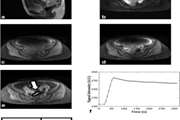
Semiquantitative Dynamic Contrast-Enhanced MRI Accurate Classification of Complex Adnexal Masses
To identify the best dynamic contrast-enhanced (DCE) magnetic resonance imaging (MRI) descriptive parameters in predicting malignancy of complex ovarian masses, and develop an optimal decision tree for accurate classification of benign and malignant complex ovarian masses
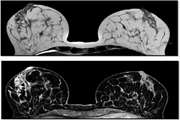
Diagnostic investigation of breast magnetic resonance imaging in malignant and benign mass lesions
Breast magnetic resonance imaging (BMRI) has been identified as a valuable modality in the diagnosis of breast cancer and monitoring the response to chemotherapy. The aim of this study was to evaluate the relative importance of different descriptors of breast masses in contrast-enhanced breast MRI
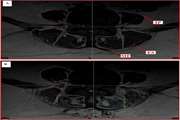
Cross-sectional area of human trunk paraspinal muscles before and after posterior lumbar surgery using magnetic resonance imaging
Iatrogenic injuries to paraspinal muscles during the posterior lumbar surgery (PLS) cause a reduction in their cross-sectional areas (CSAs) and contractile densities over time post-surgery. This study aims to quantify such alterations.
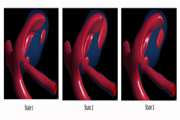
Effects of Variations of Flow and Heart Rate on Intra-Aneurysmal Hemodynamics in a Ruptured Internal Carotid Artery Aneurysm During Exercise
This study aimed to investigate the effects of variations in heart rate and internal carotid artery (ICA) flow rate on intra-aneurysmal hemodynamics, in an ICA aneurysm, by using computational fluid dynamics
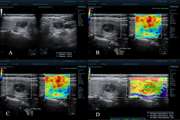
Application of Sonoelastography in Differential Diagnosis of Benign and Malignant Thyroid Nodules
Sonoelastography could help to differentiate benign and malignant thyroid nodules. As our sample size was limited, larger studies are recommended
Diagnostic Accuracy of Coronary Calcium Score Less than 100 in Excluding Coronary Artery Disease
In this study, we evaluated the diagnostic accuracy, negative predictive value (NPV), positive predictive value (PPV), specificity and sensitivity of CACS less than 100 in predicting significant coronary artery stenosis in patients with risk of coronary artery disease (CAD) in a vessel-based analysis

