Analysis of TIRADS and ATA Classification in Thyroid Nodules
https://adir.tums.ac.ir//news/A-Comparative-Analysis-of-TIRADS-and-ATA-Classification-Systems-in-Determining-the-Malignancy-of-Thyroid-Nodules
A Comparative Analysis of TIRADS and ATA Classification Systems in Determining the Malignancy of Thyroid Nodules The present study aims to compare the diagnostic performance of two ultrasound classifications of thyroid nodules 2015 American Thyroid Association (ATA) guidelines and 2017 American College of Radiology (ACR) Thyroid Imaging, Reporting and Data System (TI-RADS). This comparison evaluates the association of these classifications with the Bethesda system regarding the malignancy of thy
Explainable AI in Non-Contrast Brain CT Scan for Intracerebral H
https://adir.tums.ac.ir//article/Explainable-Artificial-Intelligence-in-Non–Contrast-Brain-Computed-Tomography-Scan-for-Intracerebral-Hemorrhage:-A-Scoping-Review
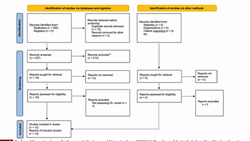
Explainable Artificial Intelligence in Non-Contrast Brain Computed Tomography Scan for Intracerebral Hemorrhage A Scoping Review Introduction Artificial intelligence (AI) models applied to non-contrast brain computed tomography (CT) scan have demonstrated promising performance in hematoma detection, segmentation, and outcome prediction. Explainable artificial intelligence (XAI) has been proposed as a strategy to improve transparency and facilitate clinical integration. This study aimed to map an

Ultrasonographic Features of Polycaprolactone Granulomatous Reac
https://adir.tums.ac.ir//news/Ultrasonographic-Features-of-Polycaprolactone-Granulomatous-Reactions:-Case-Series-and-a-Literature-Review/327509
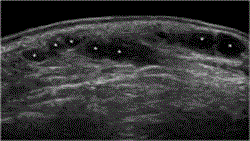
tions Case Series and a Literature Review Polycaprolactone (PCL) dermal fillers are widely used to stimulate collagen production and achieve long-lasting aesthetic results. Despite a favorable safety profile, case reports have described adverse events, including granuloma formation. The authors present 4 cases of granulomatous reactions after PCL injections, characterized clinically by painless, firm subcutaneous nodules and ultrasonographically by hypoechoic lesions with surface echogenic foci
Ultrasonographic evaluation of cosmetic fillers
https://adir.tums.ac.ir//news/Ultrasonographic-evaluation-of-cosmetic-fillers:-patterns-and-frequent-complications–A-literature-review/326626
patterns and frequent complications-A literature review Purpose The use of cosmetic fillers has become increasingly popular. Radiologists and sonographers should be aware of the ultrasonographic characteristics of the most commonly used cosmetic fillers and the sonographic features of their frequent complications. Methods Ultrasound findings of hyaluronic acid (HA), poly-L-lactic acid (PLLA), calcium hydroxyapatite (CaHA), polymethylmethacrylate (PMMA), polycaprolactone (PCL), silicone oil, poly

Differences in Ultrasound Characteristics Among Molecular Subtyp
https://adir.tums.ac.ir//news/Differences-in-Ultrasound-Characteristics-Among-Molecular-Subtypes-of-Breast-Cancer:-A-Retrospective-Cross–Sectional-Analysis
es of Breast Cancer A Retrospective Cross-Sectional Analysis Background Breast cancer molecular subtyping is crucial for prognosis and treatment planning, prompting interest in noninvasive ultrasound-based approaches for identifying relevant correlations. Objectives Breast cancer, which is highly prevalent worldwide, comprises several molecular subtypes, including luminal A (LA), luminal B (LB), triple-negative (TN), and human epidermal growth factor receptor 2-positive (HER2+). These subtypes h
Global, regional and national burden of ischemic heart disease a
https://adir.tums.ac.ir//news/Global,-regional-and-national-burden-of-ischemic-heart-disease-attributable-to-suboptimal-diet,-1990–2023:-a-Global-Burden-of-Disease-study
ttributable to suboptimal diet, 1990-2023 a Global Burden of Disease study Ischemic heart disease (IHD) remains a leading cause of death worldwide, with dietary risks being its most significant modifiable factor. Here, using the Global Burden of Diseases, Injuries and Risk Factors Study 2023, we estimated the mortality and disability-adjusted life years from diet-related IHD across 204 countries. In 2023, a suboptimal diet was responsible for 4.06 million (95% uncertainty interval (UI) 0.74-6.22

Application of radiomics in abdominal aortic aneurysm
https://adir.tums.ac.ir//news/Application-of-radiomics-in-abdominal-aortic-aneurysm-and-endovascular-aneurysm-repair–related-adverse-events-imaging:-a-systematic-review/326614
and endovascular aneurysm repair-related adverse events imaging a systematic review Background Abdominal aortic aneurysm (AAA) carries high morbidity and mortality, while adverse events (AE) after endovascular aneurysm repair (EVAR) remain a major challenge. Accurate risk stratification is essential. Radiomics, by extracting quantitative imaging features, offers a noninvasive approach that may improve prediction of AAA outcomes and EVAR-related AE beyond conventional imaging. Main body A search
Evaluating BIRADS 3 and 4 Non Mass-Enhancement by Ultrasonograph
https://adir.tums.ac.ir//article/Second–Look-Ultrasonography-for-Evaluating-BIRADS-3-and-4-Non-Mass–Enhancement:-A-Cross–Sectional-Study
Second-Look Ultrasonography for Evaluating BIRADS 3 and 4 Non Mass-Enhancement A Cross-Sectional Study Background and Aims Breast MRI is a highly sensitive imaging modality for assessing suspected breast lesions; nevertheless, its specificity is poor, ranging from 40% to 80% in various studies. Second‐look ultrasound (SLUS) is a tool for the validation of MRI‐identified breast abnormalities. This study aimed to assess the role of SLUS as a complementary method for evaluating suspicious non mass‐
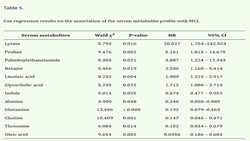
association with white matter hyperintensity in patients with m
https://adir.tums.ac.ir//article/Metabolic-profile-association-with-white-matter-hyperintensity-in-patients-with-mild-cognitive-impairment
Metabolic profileild cognitive impairment Brain vasculopathy, including cerebral white matter hyperintensity (WMH), is highly associated with mild cognitive impairment (MCI) and Alzheimer's disease (AD) pathology. Metabolite levels provide clues to illuminate the mechanism of WMH in MCI. Therefore, the current study investigated the association between metabolite profile and WMH in MCI. Metabolite profiles and WMH data of MCI patients with three consecutive years of follow-up were retrospectivel

saphenofemoral junction reflux and lower-limb venous diameters i
https://adir.tums.ac.ir//article/Prevalence-of-saphenofemoral-junction-reflux-and-lower–limb-venous-diameters-in-kidney-transplant-recipients:-A-cross–sectional-duplex-ultrasound-study
Prevalence of n kidney transplant recipients A cross-sectional duplex ultrasound study Background and aims Vascular in renal transplant recipients, although uncommon, may pose risks to graft function and patient outcomes. This study investigated the prevalence and characteristics of saphenofemoral junction (SFJ) reflux and lower-limb venous parameters in kidney transplant recipients. Methods In this cross-sectional study, patients with a history of kidney transplantation referred to Sina Hospi