Diagnostic performance of different imaging modalities for splen
https://adir.tums.ac.ir//news/Diagnostic-performance-of-different-imaging-modalities-for-splenic-malignancies:-A-comparative-meta–analysis/292747
ic malignancies A comparative meta analysis Background and objectives The spleen hosts both benign and malignant lesions. Despite multiple imaging modalities, the distinction between these lesions poses a diagnostic challenge, marked by varying diagnostic accuracy levels across methods. In this study, we aimed to evaluate and compare the diagnostic performance of various imaging techniques for detecting malignant splenic lesions. Methods Following PRISMA guidelines, we searched PubMed, Scopus, a

Clinical, laboratory, and outcomes correlation in COVID-19
https://adir.tums.ac.ir//Research-Article/Correlation-of-clinical,-laboratory,-and-short-term-outcomes-of-immunocompromised-and-immunocompetent-COVID-19-patients-with-semi-quantitative-chest-CT-score-findings:-A-case-control-study
Correlation of clinical, laboratory, and short term outcomes of immunocompromised and immunocompetent COVID 19 patients with semi quantitative chest CT score findings A case control study Background As the effects of immunosuppression are not still clear on COVID-19 patients, we conducted this study to identify clinical and laboratory findings associated with pulmonary involvement in both immunocompromised and immunocompetent patients. Methods A case-control of 107 immunocompromised and 107 immu

Differentiation of COVID-19 pneumonia from other lung diseases
https://adir.tums.ac.ir//Research-Article/Differentiation-of-COVID-19-pneumonia-from-other-lung-diseases-using-CT-radiomic-features-and-machine-learning:-A-large-multicentric-cohort-study
Differentiation of COVID 19 pneumonia from other lung diseases using CT radiomic features and machine learning A large multicentric cohort study o derive and validate an effective machine learning and radiomics-based model to differentiate COVID-19 pneumonia from other lung diseases using a large multi-centric dataset. In this retrospective study, we collected 19 private and five public datasets of chest CT images, accumulating to 26 307 images (15 148 COVID-19; 9657 other lung dis

artificial intelligence CT quantification in predicting COVID-1
https://adir.tums.ac.ir//article/Accuracy-of-artificial-intelligence-CT-quantification-in-predicting-COVID-19-subjects’-prognosis
Accuracy of artificial intelligence CT quantification in predicting COVID 19 subjects’ prognosis Background Artificial intelligence (AI)-aided analysis of chest CT expedites the quantification of abnormalities and may facilitate the diagnosis and assessment of the prognosis of subjects with COVID-19. Objectives This study investigates the performance of an AI-aided quantification model in predicting the clinical outcomes of hospitalized subjects with COVID-19 and compares it with radiologists' p
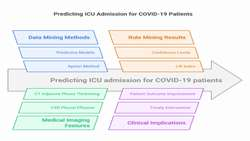
radiological features and COVID-19 patients’ deterioration
https://adir.tums.ac.ir//article/Discovering-associations-between-radiological-features-and-COVID-19-patients’-deterioration
Discovering associations between radiological features and COVID 19 patients’ deterioration Background and aims Data mining methods are effective and well-known tools for developing predictive models and extracting useful information from various data of patients. The present study aimed to predict the severity of patients with COVID-19 by applying the rule mining method using characteristics of medical images. Methods This retrospective study has analyzed the radiological data from 104 COVID-19
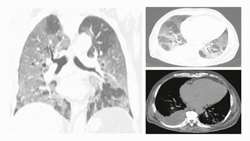
Chest CT scan features to predict COVID-19
https://adir.tums.ac.ir//news/Chest-CT-scan-features-to-predict-COVID-19-patients’-outcome-and-survival
Chest CT scan features to predict COVID 19 patients’ outcome and survival Background Providing efficient care for infectious coronavirus disease 2019 (COVID-19) patients requires an accurate and accessible tool to medically optimize medical resource allocation to high-risk patients. Purpose To assess the predictive value of on-admission chest CT characteristics to estimate COVID-19 patients' outcome and survival time. Materials and Methods Using a case-control design, we included all laboratory-
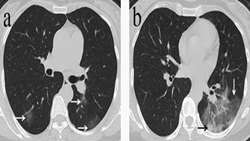
CT Scans in Severe Initial Pulmonary Involvement by COVID-19
https://adir.tums.ac.ir//Research-Article/Evaluation-of-Follow-Up-CT-Scans-in-Patients-with-Severe-Initial-Pulmonary-Involvement-by-COVID-19
Evaluation of Follow Up CT Scans in Patients with Severe Initial Pulmonary Involvement by COVID 19 Objective To investigate the predictive factors of residual pulmonary opacity on midterm follow-up CT scans in patients hospitalized with COVID-19 pneumonia. Materials and methods This prospective study was conducted in a tertiary referral university hospital in Iran, from March 2020 to December 2020. Patients hospitalized due to novel coronavirus pneumonia with bilateral pulmonary involvement in t
Basal and Sphenobasion angles using CT Scan
https://adir.tums.ac.ir//Research-Article/Evaluation-of-the-Basal-and-Sphenobasion-angles-using-CT-Scan-in-the-Iranian-population
Evaluation of the in the Iranian population Objectives This study aimed to find the difference in the values of the cranial base angles among Iranian adults and investigate the relationship between the Basal and Sphenobasion angles.Methods 100 individuals (50 males and 50 females) aged between 18 to 60 participated in this cross-sectional study which was carried out from September 2018 to September 2019 in the imaging centers affiliated with the Faculty of Medicine, Tehran University of Medical
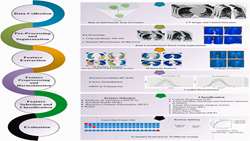
COVID-19 using CT radiomics and machine learning
https://adir.tums.ac.ir//news/COVID-19-prognostic-modeling-using-CT-radiomic-features-and-machine-learning-algorithms:-Analysis-of-a-multi-institutional-dataset-of-14,339-patients:-COVID-19-prognostic-modeling-using-CT-radiomics-and-machine-learning
COVID 19 prognostic modeling using CT radiomic features and machine learning algorithms Analysis of a multi institutional dataset of 14,339 patients COVID 19 prognostic modeling using CT radiomics and machine learning Background We aimed to analyze the prognostic power of CT-based radiomics models using data of 14,339 COVID-19 patients. Methods Whole lung segmentations were performed automatically using a deep learning-based model to extract 107 intensity and texture radiomics features. We used
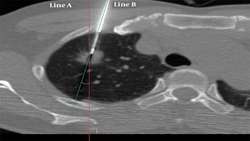
Percutaneous Needle Biopsy of Pulmonary Nodules under CT Fluoros
https://adir.tums.ac.ir//Research-Article/Technical-Accuracy-of-Percutaneous-Needle-Biopsy-of-Subcentimeter-Pulmonary-Nodules-under-CT-Fluoroscopy-Guidance-and-Associated-Procedural-Complication
Technical Accuracy of Percutaneous Needle Biopsy of Subcentimeter Pulmonary Nodules under CT Fluoroscopy Guidance and Associated Procedural Complication Introduction According to the limited information in computed tomography (CT)-guided percutaneous core needle biopsy (PCNB) of subcentimeter pulmonary nodules with radiation burden to the patients and operator for diagnosis of lung lesions as benign or malignant, we aimed to evaluate the accuracy rate of CT fluoroscopy-guided biopsy in these nod