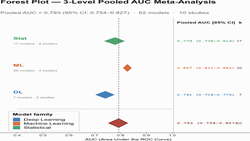
Artificial Intelligence for Rupture Risk Stratification of Small
https://adir.tums.ac.ir//news/Artificial-Intelligence-for-Rupture-Risk-Stratification-of-Small-Unruptured-Intracranial-Aneurysms-(≤ 7-mm):-A-Systematic-Review-and-Meta–analysis
Unruptured Intracranial Aneurysms (≤ 7 mm) A Systematic Review and Meta-analysis Small unruptured intracranial aneurysms (UIAs; ≤ 7 mm) carry collectively significant rupture risk, yet conventional scoring tools (PHASES, ELAPSS) perform near chance-level in this subgroup. This systematic review and meta-analysis evaluated the pooled diagnostic accuracy of AI-based models for rupture risk prediction in small UIAs and compared performance across algorithmic architectures. Prospect
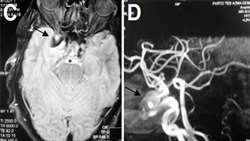
Uncommon Patterns of Intracranial Aneurysms
https://adir.tums.ac.ir//news/Uncommon-Patterns-of-Intracranial-Aneurysms:-A-Pictorial-Essay/240165
A Pictorial Essay “Landmark identification on 2D MRI and 3D MRI-based knee models showed excellent reliability (ICC > 0.97) with minimal errors.” Intracranial aneurysms are relatively common, with a prevalence of approximately 4%. Unruptured aneurysms may cause symptoms mainly due to a mass effect, but the real danger is when an aneurysm ruptures, leading to a subarachnoid hemorrhage. Most aneurysms are asymptomatic and will not rupture, but they grow unpredictably and even small aneurysms car