کلیدواژه
https://adir.tums.ac.ir//keywords/ct/صفحه:9
Performance of magnetic-resonance imaging radiomics in prediction of response after neoadjuvant chemotherapy in head and neck squamous cell carcinoma A systematic review and meta-analysis https//adir.tums.ac.ir//Research-Article/Performance-of-magnetic–resonance-imaging-radiomics-in-prediction-of-response-after-neoadjuvant-chemotherapy-in-head-and-neck-squamous-cell-carcinoma-A-systematic-review-and-meta–analysis Objective To evaluate performance of MRI-based radiomics for evaluating response to
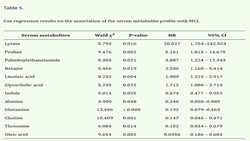
association with white matter hyperintensity in patients with m
https://adir.tums.ac.ir//article/Metabolic-profile-association-with-white-matter-hyperintensity-in-patients-with-mild-cognitive-impairment
Metabolic profileild cognitive impairment Brain vasculopathy, including cerebral white matter hyperintensity (WMH), is highly associated with mild cognitive impairment (MCI) and Alzheimer's disease (AD) pathology. Metabolite levels provide clues to illuminate the mechanism of WMH in MCI. Therefore, the current study investigated the association between metabolite profile and WMH in MCI. Metabolite profiles and WMH data of MCI patients with three consecutive years of follow-up were retrospectivel
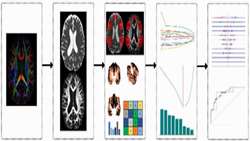
A DTI Radiomics Study of Language Network Featuresin in Alzheim
https://adir.tums.ac.ir//AI/A-DTI-Radiomics-Study-of-Language-Network-Features-Predicting-Conversion-from-Mild-Cognitive-Impairment-to-Alzheimer’s-Disease
A DTI Radiomics Study of Language Network Features Predicting Conversion from Mild Cognitive Impairment to Alzheimer’s Disease Background Mild cognitive impairment (MCI) precedes Alzheimer’s disease (AD) in ∼40% of cases, with early language deficits distinguishing converters. This study develops a DTI radiomics model from language network gray matter to predict MCI to AD conversion and identify preclinical biomarkers. Methods This retrospective case-control study analyzed diffusion te
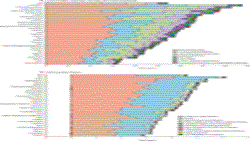
Burden of 292 causes of death and life expectancy decomposition
https://adir.tums.ac.ir//article/Burden-of-292-causes-of-death-and-life-expectancy-decomposition-in-Iran,-1990–2023:-a-systematic-analysis-for-the-Global-Burden-of-Disease-Study-2023
in Iran, 1990-2023 a systematic analysis for the Global Burden of Disease Study 2023 Background Better evaluation of the contribution of the main diseases, injuries, and risk factors for mortality and life expectancy is crucial for more efficient policy making at the national and subnational levels in Iran. The aim of this study is to assess the effect of emerging causes of mortality on health, specifically COVID-19, which can help policy makers implement preventive measures in similar situation

White Matter Changes in Lewy vs. Alzheimer’s Dementia
https://adir.tums.ac.ir//news/Comparative-analysis-of-white-matter-signal-alterations-in-dementia-with-Lewy-bodies-and-Alzheimer’s-disease:-a-systematic-review-and-meta–analysis/299501
Comparative analysis of white matter signal alterations in dementia with Lewy bodies and Alzheimer’s disease a systematic review and meta analysis Background and aim Lewy body diseases (LBD) include neurodegenerative diseases such as Parkinson's disease (PD), dementia with Lewy bodies (DLB), and Parkinson's disease dementia (PDD). Because DLB and Alzheimer's disease (AD) share similar neurological symptoms, DLB is frequently underdiagnosed. White Matter Hyperintensities (WMH) are associated wit

Global burden of nervous system disorders
https://adir.tums.ac.ir//article/Global,-regional,-and-national-burden-of-disorders-affecting-the-nervous-system,-1990,-2021:-a-systematic-analysis-for-the-Global-Burden-of-Disease-Study-2021
Global, regional, and national burden of disorders affecting the nervous system, 1990, 2021 a systematic analysis for the Global Burden of Disease Study 2021 Background Disorders affecting the nervous system are diverse and include neurodevelopmental disorders, late-life neurodegeneration, and newly emergent conditions, such as cognitive impairment following COVID-19. Previous publications from the Global Burden of Disease, Injuries, and Risk Factor Study estimated the burden of 15 neurological

Association of GAP-43 with DTI in Alzheimer’s
https://adir.tums.ac.ir//news/Investigating-the-association-between-the-GAP-43-concentration-with-diffusion-tensor-imaging-indices-in-Alzheimer’s-dementia-continuum
Investigating the association between the GAP 43 concentration with diffusion tensor imaging indices in Alzheimer’s dementia continuum Background Synaptic degeneration, axonal injury, and white matter disintegration are among the pathological events in Alzheimer's disease (AD), for which growth-associated protein 43 (GAP-43) and diffusion tensor imaging (DTI) could be an indicator. In this study, the cerebrospinal fluid (CSF) GAP-43 clinical trajectories and their association with progression an

Resting-State fMRI for Differentiating Cognitive Impairments
https://adir.tums.ac.ir//article/Quantitative-Assessment-of-Resting-State-Functional-Connectivity-MRI-to-Differentiate-Amnestic-Mild-Cognitive-Impairment,-Late-Onset-Alzheimer’s-Disease-From-Normal-Subjects
Quantitative Assessment of Resting State Functional Connectivity MRI to Differentiate Amnestic Mild Cognitive Impairment, Late Onset Alzheimer’s Disease From Normal Subjects Background Alzheimer disease (AD) is a neurological disorder with brain network dysfunction. Investigation of the brain network functional connectivity (FC) alterations using resting-state functional MRI (rs-fMRI) can provide valuable information about the brain network pattern in early AD diagnosis. Purpose To quantitativel
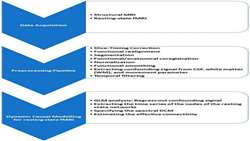
Connectivity Evaluation of Resting-State Brain Networks in Alzh
https://adir.tums.ac.ir//article/Effective-Connectivity-Evaluation-of-Resting-State-Brain-Networks-in-Alzheimer’s-Disease,-Amnestic-Mild-Cognitive-Impairment,-and-Normal-Aging:-An-Exploratory-Study
Effective Connectivity Evaluation of Resting State Brain Networks in Alzheimer’s Disease, Amnestic Mild Cognitive Impairment, and Normal Aging An Exploratory Study (1) Background Alzheimer's disease (AD) is a neurodegenerative disease with a high prevalence. Despite the cognitive tests to diagnose AD, there are pitfalls in early diagnosis. Brain deposition of pathological markers of AD can affect the direction and intensity of the signaling. The study of effective connectivity allows the evaluat
.png)
FMRI to Differentiate Amnestic Mild Cognitive Impairment
https://adir.tums.ac.ir//Research-Article/Quantitative-Assessment-of-Resting-State-Functional-Connectivity-MRI-to-Differentiate-Amnestic-Mild-Cognitive-Impairment,-Late-Onset-Alzheimer’s-Disease-From-…
Quantitative Assessment of Resting State Functional Connectivity MRI to Differentiate Amnestic Mild Cognitive Impairment, Late Onset Alzheimer’s Disease From … Background Alzheimer disease (AD) is a neurological disorder with brain network dysfunction. Investigation of the brain network functional connectivity (FC) alterations using resting-state functional MRI (rs-fMRI) can provide valuable information about the brain network pattern in early AD diagnosis. Purpose To quantitatively assess FC pa