Artificial Intelligence for Rupture Risk Stratification of Small
https://adir.tums.ac.ir//news/Artificial-Intelligence-for-Rupture-Risk-Stratification-of-Small-Unruptured-Intracranial-Aneurysms-(≤ 7-mm):-A-Systematic-Review-and-Meta–analysis
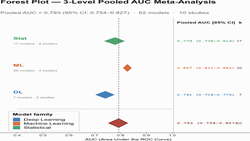
Unruptured Intracranial Aneurysms (≤ 7 mm) A Systematic Review and Meta-analysis Small unruptured intracranial aneurysms (UIAs; ≤ 7 mm) carry collectively significant rupture risk, yet conventional scoring tools (PHASES, ELAPSS) perform near chance-level in this subgroup. This systematic review and meta-analysis evaluated the pooled diagnostic accuracy of AI-based models for rupture risk prediction in small UIAs and compared performance across algorithmic architectures. Prospect
Features of Artificial Intelligence Driven Pioneer Hospitals
https://adir.tums.ac.ir//news/Features-of-Artificial-Intelligence-Driven-Pioneer-Hospitals:-Insights-from-Radiology
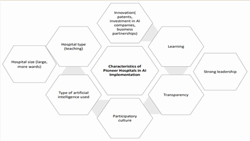
Insights from Radiology Context Artificial intelligence (AI) has a critical role in hospitals that have successfully implemented it and achieved international rankings, because these institutions can serve as benchmarks for other hospitals. The main objective of this article was to examine the characteristics of pioneer hospitals in AI, with a focus on radiology departments. Evidence Acquisition This narrative review was performed according to SANRA guidelines. Data were collected by searching P
Features of Artificial Intelligence Driven Pioneer Hospitals
https://adir.tums.ac.ir//news/Features-of-Artificial-Intelligence-Driven-Pioneer-Hospitals/328110
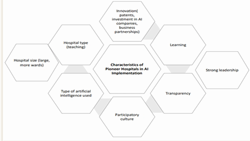
Context Artificial intelligence (AI) has a critical role in hospitals that have successfully implemented it and achieved international rankings, because these institutions can serve as benchmarks for other hospitals. The main objective of this article was to examine the characteristics of pioneer hospitals in AI, with a focus on radiology departments. Evidence Acquisition This narrative review was performed according to SANRA guidelines. Data were collected by searching PubMed, Google Scholar, a

reporting artificial intelligence confidencein radiologic diag
https://adir.tums.ac.ir//research-article/Cultivating-diagnostic-clarity-The-importance-of-reporting-artificial-intelligence-confidence-levels-in-radiologic-diagnoses
Cultivating diagnostic clarity The importance of reporting artificial intelligence confidence levels in radiologic diagnoses Accurate image interpretation is essential in the field of radiology to the healthcare team in order to provide optimal patient care. This article discusses the use of artificial intelligence (AI) confidence levels to enhance the accuracy and dependability of its radiological diagnoses. The current advances in AI technologies have changed how radiologists and clinicians ma
.png)
CADe and segmentation for breast cancer MRI
https://adir.tums.ac.ir//article/Computer–Aided-Detection-(CADe)-and-Segmentation-Methods-for-Breast-Cancer-Using-Magnetic-Resonance-Imaging-(MRI)
Computer-Aided Detection (CADe) and Segmentation Methods for Breast Cancer Using Magnetic Resonance Imaging (MRI) Breast cancer continues to be a major health concern, and early detection is vital for enhancing survival rates. Magnetic resonance imaging (MRI) is a key tool due to its substantial sensitivity for invasive breast cancers. Computer-aided detection (CADe) systems enhance the effectiveness of MRI by identifying potential lesions, aiding radiologists in focusing on areas of interest, e

brain metastasis treated with stereotactic radiosurgery using a
https://adir.tums.ac.ir//AI/Prediction-of-the-treatment-response-and-local-failure-of-patients-with-brain-metastasis-treated-with-stereotactic-radiosurgery-using-machine-learning:-A-systematic-review-and-meta-analysis
Prediction of the treatment response and local failure of patients with brain metastasis treated with stereotactic radiosurgery using machine learning A systematic review and meta analysis Background Stereotactic radiosurgery (SRS) effectively treats brain metastases. It can provide local control, symptom relief, and improved survival rates, but it poses challenges in selecting optimal candidates, determining dose and fractionation, monitoring for toxicity, and integrating with other modalities.

The performance of machine learning for predicting the recurrent
https://adir.tums.ac.ir//article/The-performance-of-machine-learning-for-predicting-the-recurrent-stroke:-a-systematic-review-and-meta-analysis-on-24,350-patients
stroke a systematic review and meta analysis on 24,350 patients Background Stroke is a leading cause of death and disability worldwide. Approximately one-third of patients with stroke experienced a second stroke. This study investigates the predictive value of machine learning (ML) algorithms for recurrent stroke. Method This study was prepared according to the Preferred Reporting Items for Systematic Reviews and Meta-Analyses (PRISMA) guideline. PubMed, Scopus, Embase, and Web of Science (WOS)

artificial intelligence integration in emergency radiology
https://adir.tums.ac.ir//research-article/Potential-strength-and-weakness-of-artificial-intelligence-integration-in-emergency-radiology:-a-review-of-diagnostic-utilizations-and-applications-in-patient-care-optimization
Potential strength and weakness of a review of diagnostic utilizations and applications in patient care optimization Artificial intelligence (AI) and its recent increasing healthcare integration has created both new opportunities and challenges in the practice of radiology and medical imaging. Recent advancements in AI technology have allowed for more workplace efficiency, higher diagnostic accuracy, and overall improvements in patient care. Limitations of AI such as data imbalances, the unclear