


Optimizing Venographic Referrals in Pelvic Congestion Syndrome: A Prospective Diagnostic Accuracy Study of Ultrasound-Based Scoring to Guide Selective Venography
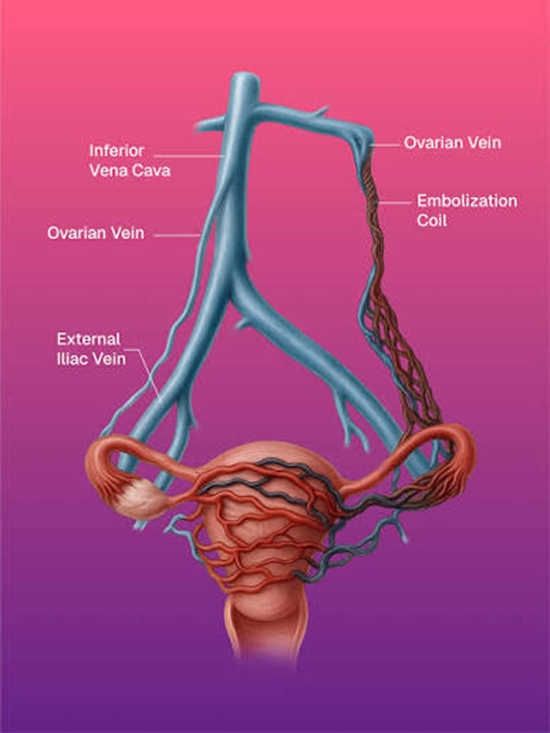
Objectives: Pelvic congestion syndrome (PCS) is a prevalent but underdiagnosed cause of chronic pelvic pain. Venography remains the diagnostic reference, yet its invasiveness limits routine use. This study evaluated standardized duplex ultrasound and developed a scoring system to guide selective, evidence-based venographic referral.
Methods: In this prospective diagnostic-accuracy study, 60 women with chronic pelvic pain underwent standardized transabdominal and transvaginal duplex ultrasound, and 40 subsequently underwent selective venography as the reference standard. Ultrasound parameters included venous diameter, evoked caudal flow duration, flow direction, velocity, bilaterality, and myometrial plexus enlargement. Penalized logistic regression with bootstrap-nested cross-validation identified independent predictors of venography-confirmed PCS. Coefficients were converted into a point-score to classify patients into rule-out, indeterminate, and rule-in bands. Diagnostic performance, calibration, and decision-curve analyses were used to evaluate discrimination and clinical utility across probability thresholds.
Results: Venography confirmed PCS in 26 of 40 participants (65%). A 6-mm diameter threshold provided optimal diagnostic balance (sensitivity 92.3%, specificity 64.3%). The penalized model retained diameter, reflux ≥1.0 second, low velocity ≤3 cm/second, Valsalva-evoked caudal flow, myometrial plexus enlargement, and bilaterality, achieving an optimism-corrected AUC of 0.861. The derived score stratified patients into rule-out, indeterminate, and rule-in groups with high predictive accuracy (positive predictive value 93.3%, negative predictive value 91.7%). Decision-curve analysis showed higher net benefit than treat-all or treat-none strategies.
Conclusion: Standardized duplex ultrasound integrating morphologic and hemodynamic parameters accurately identified venographic PCS and enabled selective triage. The validated score supports ultrasound as an effective, noninvasive first-line tool to optimize venography and guide patient-centered management.



ارسال نظر