Contrast-Enhanced Mammography versus Breast MRI for breast cance
https://adir.tums.ac.ir//news/Diagnostic-Performance-of-Contrast–Enhanced-Mammography-versus-Breast-MRI-for-Detecting-Breast-Cancer:-A-Systematic-Review-and-Meta–Analysis/331945
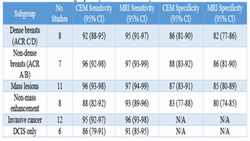
Diagnostic Performance of Contrast-Enhanced Mammography versus Breast MRI for Detecting Breast Cancer A Systematic Review and Meta-Analysis Background Contrast-enhanced mammography (CEM) is an emerging alternative to breast magnetic resonance imaging (MRI) for detecting breast cancer, offering lower cost and shorter acquisition time. However, comparative diagnostic accuracy remains uncertain. Objective To compare the diagnostic performance of CEM versus breast MRI for breast cancer detection usi

Differences in Ultrasound Characteristics Among Molecular Subtyp
https://adir.tums.ac.ir//news/Differences-in-Ultrasound-Characteristics-Among-Molecular-Subtypes-of-Breast-Cancer:-A-Retrospective-Cross–Sectional-Analysis
es of Breast Cancer A Retrospective Cross-Sectional Analysis Background Breast cancer molecular subtyping is crucial for prognosis and treatment planning, prompting interest in noninvasive ultrasound-based approaches for identifying relevant correlations. Objectives Breast cancer, which is highly prevalent worldwide, comprises several molecular subtypes, including luminal A (LA), luminal B (LB), triple-negative (TN), and human epidermal growth factor receptor 2-positive (HER2+). These subtypes h
radiotherapy in breast cancer
https://adir.tums.ac.ir//Research-Article/Systematic-review-and-meta–analysis-of-hypofractionated-and-conventional-fractionated-radiotherapy-on-survival-in-breast-cancer-patients
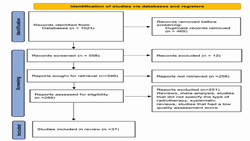
Systematic review and meta-analysis of hypofractionated and conventional fractionated radiotherapy on survival in breast cancer patients Introduction Breast cancer is the most common malignancy among women around the world, and considering the low α/β ratio, it appears that the efficiency of hypofractionated radiotherapy (HFRT) is equal to conventional fractionated radiotherapy (CFRT). Accordingly, the goal of this meta-analysis was to estimate the survival rate of patients with breas

contrast-enhanced mammography in evaluating breast cancer respon
https://adir.tums.ac.ir//Research-Article/Diagnostic-accuracy-of-contrast–enhanced-mammography-in-evaluating-breast-cancer-response-to-neoadjuvant-therapy:-a-systematic-review-and-meta–analysis
Diagnostic accuracy of se to neoadjuvant therapy a systematic review and meta-analysis Purpose Neoadjuvant therapy (NAT) in breast cancer enables tumor downstaging and response evaluation. Although magnetic resonance imaging (MRI) is the gold standard, its limitations have prompted growing interest in alternatives such as contrast-enhanced mammography (CEM). Methods This review was conducted according to PRISMA guidelines. We evaluated CEM accuracy in predicting pathological complete response af

MRI in Detecting Axillary Lymph Node Metastasis in Breast Cancer
https://adir.tums.ac.ir//Research-Article/Comparative-Analysis-of-Abbreviated-and-Full-Protocol-MRI-in-Detecting-Axillary-Lymph-Node-Metastasis-in-Patients-with-Known-Breast-Cancer
Comparative Analysis of Abbreviated and Full Protocol MRI in Detecting Axillary Lymph Node Metastasis in Patients with Known Breast Cancer Background Accurate axillary lymph node staging is crucial for breast cancer prognosis and treatment planning. This study compares the diagnostic efficacy of abbreviated MRI (AB-MRI) protocols with limited sequences and reduced time, against full-diagnostic MRI (FD-MRI) in staging axillary lymph node metastasis of breast cancer patients. Methods This was a
ADC and Histopathologic Prognostic in Breast Cancer
https://adir.tums.ac.ir//article/Associations-Between-Apparent-Diffusion-Coefficient-Values-and-Histopathologic-Prognostic-Factors-in-Breast-Cancer:-A-Retrospective-Study
Associations Between Apparent Diffusion Coefficient Values and Histopathologic Prognostic Factors in Breast Cancer A Retrospective Study Background This study is aimed at investigating the correlation between apparent diffusion coefficient (ADC) values obtained from diffusion-weighted imaging (DWI) and prognostic factors in breast cancer. We hypothesized that lower ADC values would be observed in more aggressive tumors, including those with higher histological grades and Ki-67 expression levels.

No Restriction on DWI and Low Uptake in PET CT in Breast Lobular
https://adir.tums.ac.ir//case-report/No-Restriction-on-DWI-and-Low-Uptake-in-PET-CT-in-a-Genital-Metastasis-from-Breast-Lobular-Cancer
No Restriction on DWI and Low Uptake in PET CT in a Genital Metastasis from Breast Lobular Cancer Objectives Metastasis of breast cancer to genital organs is rare and the ovaries are the most common site of metastasis from extra-genital primary cancer. Invasive lobular carcinoma (ILC) is the most frequent type of breast cancer causing distant metastasis. Case report A 41-year-old woman with past medical history of right breast invasive lobular carcinoma and breast conservative surgery 3 years be

Impact of microRNA variants on PI3K/AKT signaling in triple-nega
https://adir.tums.ac.ir//article/Impact-of-microRNA-variants-on-PI3K-AKT-signaling-in-triple-negative-breast-cancer:-comprehensive-review
Impact of microRNA variants on PI3K AKT signaling in triple negative breast cancer comprehensive review Breast cancer (BC) is a significant cause of cancer-related mortality, and triple-negative breast cancer (TNBC) is a particularly aggressive subtype associated with high mortality rates, especially among younger females. TNBC poses a considerable clinical challenge due to its aggressive tumor behavior and limited therapeutic options. Aberrations within the PI3K/AKT pathway are prevalent in TNB
Kaiser score in the evaluation of breast cancer using MRI
https://adir.tums.ac.ir//news/Diagnostic-performance-of-Kaiser-score-in-the-evaluation-of-breast-cancer-using-MRI:-A-systematic-review-and-meta-analysis
Diagnostic performance of A systematic review and meta analysis Purpose To assess the performance of Kaiser score (KS) in detecting and characterizing breast cancer on magnetic resonance imaging (MRI). Methods The protocol was pre-registered at (https//osf.io/83c6j/). We performed a comprehensive search in PubMed, Embase, Cochrane Library, and Web of Science until 30 October 2024 for studies that used KS for detection of breast cancer on MRI. The risk of bias in the included studies was evaluate
.png)
CADe and segmentation for breast cancer MRI
https://adir.tums.ac.ir//article/Computer–Aided-Detection-(CADe)-and-Segmentation-Methods-for-Breast-Cancer-Using-Magnetic-Resonance-Imaging-(MRI)
Computer-Aided Detection (CADe) and Segmentation Methods for Breast Cancer Using Magnetic Resonance Imaging (MRI) Breast cancer continues to be a major health concern, and early detection is vital for enhancing survival rates. Magnetic resonance imaging (MRI) is a key tool due to its substantial sensitivity for invasive breast cancers. Computer-aided detection (CADe) systems enhance the effectiveness of MRI by identifying potential lesions, aiding radiologists in focusing on areas of interest, e