Neoadjuvant chemo for HER2-negative breast cancer
https://adir.tums.ac.ir//article/Neoadjuvant-Chemotherapy-in-Patients-with-HER2,-Negative-Breast-Cancer:-A-Report-from-Clinical-Breast-Cancer-Registry-of-Iran
Neoadjuvant Chemotherapy in Patients with HER2, Negative Breast Cancer A Report from Clinical Breast Cancer Registry of Iran Background Neoadjuvant chemotherapy (NCT) has become an increasingly popular approach in management of breast cancer (BC). This study was conducted to evaluate the pathologic response and 36-month recurrence and survival rates of patients with human epidermal growth factor receptor 2 (HER2)-negative BC treated with different NCT regimens. Methods A total of 163 female pati
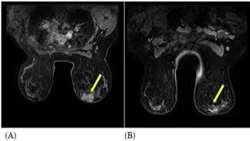
(DCE-MRI) in the prediction of neoadjuvant chemotherapy response
https://adir.tums.ac.ir//article/contras-enhanced-magnetic-resonance-imaging-(DCE-MRI)-in-the-prediction-of-neoadjuvant-chemotherapy-response-in-breast-cancer:-A-Meta-Analysis
contras enhanced magnetic resonance imaging (DCE MRI) in the prediction of neoadjuvant chemotherapy response in breast cancer A Meta Analysis Background The Breast dynamic Contrast-Enhanced Magnetic Resonance Imaging (DCE-MRI) is utilized for screening breast cancer (BC) in women with a total lifetime BC risk of greater than 20-25%. This study aimed to assess the DCE-MRI value in predicting response to neoadjuvant chemotherapy (NAC) in BC patients. Materials and Methods International databases,
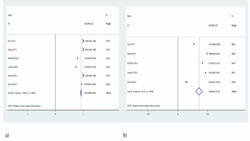
Assessment of pathological response using PET/MRI
https://adir.tums.ac.ir//article/The-role-of-18F⁄FDG-PET⁄MRI-in-assessing-pathological-complete-response-to-neoadjuvant-chemotherapy-in-patients-with-breast-cancer:-a-systematic-review-and-meta-analysis
The role of 18F/FDG PET/MRI in assessing pathological complete response to neoadjuvant chemotherapy in patients with breast cancer a systematic review and meta analysis Background and aim The present study aimed to evaluate the use of 18F-2-[18F]-fluoro-2-deoxy-d-glucose (FDG) PET/MRI (Positron emission tomography-computed tomography) in predicting the pathological response to neoadjuvant chemotherapy (NAC) in patients with breast cancer (BC) compared to the use of MRI (Magnetic Resonance Imagin
.png)
Tomosynthesis in Determining the BI-RADS Score
https://adir.tums.ac.ir//Research-Article/Role-of-Tomosynthesis-in-Determining-the-BI-RADS-Score-of-Individuals-with-Indeterminate-Mammography-Results
Role of Tomosynthesis in Determining the BI RADS Score of Individuals with Indeterminate Mammography Results Background Tomosynthesis, despite its potential to produce superior images compared to mammography for Breast Imaging- Reporting and Data System (BI-RADS) scoring, has not yet been widely adopted. This is likely due to a combination of insufficient data and a scarcity of expertise in this area. Objectives In this study, we aimed to evaluate the potential benefits of tomosynthesis for pati

Better Breast Cancer Care in High-HDI Countries
https://adir.tums.ac.ir//article/Patterns-of-better-breast-cancer-care-in-countries-with-higher-human-development-index-and-healthcare-expenditure:-Insights-from-GLOBOCAN-2020
Patterns of better breast cancer care in countries with higher human development index and healthcare expenditure Insights from GLOBOCAN 2020 Background The huge burden of breast cancer (BC) necessitates the profound and accurate knowledge of the most recent cancer epidemiology and quality of care provided. We aimed to evaluate BC epidemiology and quality of care and examine the effects of socioeconomic development and healthcare expenditure on disparities in BC care. Methods The results from th
_1.png)
imaging and diagnostic value of radiology in breast malignancy
https://adir.tums.ac.ir//Research-Article/The-imaging-findings-and-diagnostic-value-of-radiology-modalities-to-assess-breast-malignancy-among-women-aged-younger-than-30-years
The imaging findings and diagnostic value of radiology modalities to assess breast malignancy among women aged younger than 30 years Background Breast cancer mainly affects women aged >50 years; however, younger women may also have advanced breast cancer, so early detection is important. Purpose To collect and review the imaging findings of women aged <30 years with breast cancer to find better diagnostic approaches for the early diagnosis of breast cancer in young women. Material and meth

Spectrum of ultrasound findings in patients
https://adir.tums.ac.ir//article/Spectrum-of-ultrasound-findings-in-patients-with-history-of-breast-conservative-treatment
with history of breast conservative treatment Breast conservative treatment (BCT) is currently accepted as the standard treatment option for breast cancer. Targeted ultrasound helps detect recurrent lesions, postoperative changes, and scarring tissue. In this pictorial essay, we review the ultrasound features of benign (seroma, hematoma, fat necrosis, traumatic neuroma, fibrosis/scarring) and malignant (recurrence, new primary cancer) causes of palpable lumps after BCT and provide images from ou
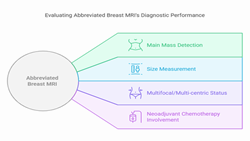
Abbreviated breast MRI for evaluating breast cancer
https://adir.tums.ac.ir//article/Abbreviated-breast-MRI-for-evaluating-breast-cancer-before-initiation-of-neoadjuvant-chemotherapy:-A-cross-sectional-study-
before initiation of neoadjuvant chemotherapy A cross sectional study Background Although, there are accumulating evidence about diagnostic role of abbreviated breast magnetic resonance imaging (MRI) in screening setting, the implementation of abbreviated MRI in staging of breast cancer has been poorly elucidated. Objective To evaluate the diagnostic performance of abbreviated breast MRI in estimating extent of disease before initiation of neoadjuvant chemotherapy. Methods A total of 54 patients
.png)
novel lncRNA in triple-negative breast cancer pathogenesis
https://adir.tums.ac.ir//article/SBF2-AS1-and-TreRNA:-novel-lncRNA-players-in-triple-negative-breast-cancer-pathogenesis
SBF2 AS1 and TreRNA novel lncRNA players in triple negative breast cancer pathogenesis Background Compared to other breast cancer subtypes, triple-negative breast cancer (TNBC) has always been challenging for clinicians due to its aggressive behavior and lack of a specific treatment. There is a confirmed association between invasive features of tumors and increased epithelial-mesenchymal transition (EMT) process, which is consistent with a higher rate of EMT in TNBC. Methods and results We inves
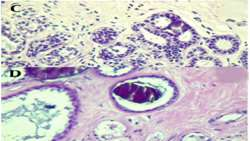
Stereotactic-Guided Vacuum Biopsy in Breast Microcalcifications
https://adir.tums.ac.ir//Research-Article/Successful-Stereotactic-Guided-Vacuum-Assisted-Biopsy-in-the-Evaluation-of-Breast-Microcalcifications:-A-Study-in-a-Single-Tertiary-Referral-Center-in-the-…
Successful Stereotactic Guided Vacuum Assisted Biopsy in the Evaluation of Breast Microcalcifications A Study in a Single Tertiary Referral Center in the … This study examined the outcomes of vacuum-assisted biopsy (VAB) for assessing breast microcalcifications. Conducted on 257 patients, most were classified under BI-RADS 4B (80.2%) and 4C (17.1%). More than half (57.6%) had microcalcifications distributed in multiple groups, with the most common morphology being punctate amorphous (42.4%). Pat