



The application of Machine learning in predicting the outcomes of minimally invasive treatments for uterine Fibroids: A systematic review and meta-analysis
Rationale and objectives: Uterine fibroids (UFs) are common benign tumors that impact women's health, particularly through symptoms such as abnormal bleeding or reproductive dysfunction. Interventional radiology (IR) techniques like uterine artery embolization (UAE) and high-intensity focused ultrasound (HIFU) are minimally invasive alternatives to surgery. Machine learning (ML) has shown promise in predicting treatment outcomes, though the optimal model remains uncertain. This systematic review and meta-analysis evaluate models predicting outcomes of minimally invasive treatments for uterine fibroids.
Materials & methods: A comprehensive search was conducted across five databases (PubMed, Embase, Scopus, Web of Science, and Cochrane) through November 2024, following PRISMA guidelines and registered in PROSPERO. Studies using ML to predict different outcomes of UFs treatment via minimally invasive treatments were included. PROBAST + AI was used to assess study quality. Pooled sensitivity, specificity, and AUC values were calculated using a bivariate random effect model.
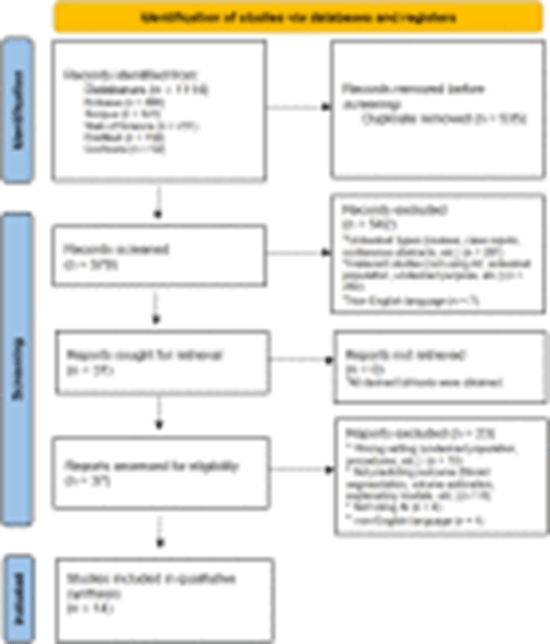
Results: Out of 1,114 records, fourteen studies met the inclusion criteria, with 12 focusing on HIFU and two on UAE. Logistic regression was the most commonly used approach, while gradient‑boosting models reported high discrimination in some individual studies; however, external validation was uncommon and risk of bias was frequently high. AUCs for radiomics-based models ranged from 0.668 to 0.887, and combined models ranged from 0.773 to 0.93. Meta-analysis of five HIFU-based radiomics studies demonstrate pooled sensitivity of 75% and specificity of 76% respectively, with an AUC of 0.82.
Conclusion: ML models, particularly those integrating radiomics and clinical data, show strong performance in predicting image-guided treatment outcomes in UFs. These approaches support a promising path toward individualized treatment planning and may improve patient selection in clinical workflow.
Keywords: High-intensity focused ultrasound; Machine learning; Minimally invasive treatment; Outcome prediction; Uterine artery embolization; Uterine fibroid.



ارسال نظر