


Efficacy of Carotid Artery Stenting Without Embolic Protection Device for Carotid Stenosis: A Retrospective Cohort Study from a Major Neurointerventional Center
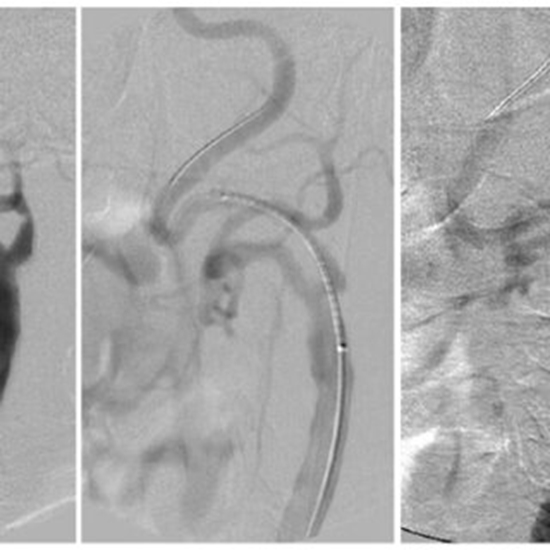
Objectives: This study aims to assess the effectiveness and safety of carotid artery stenting (CAS) as a method for reducing the risk of stroke in patients with carotid stenosis (CS).
Methods: This retrospective cohort study analyzed all patients with internal carotid artery (ICA) stenosis who underwent CAS at a single neurointerventional center from January 2016 to September 2022. Patients with concurrent intracranial stenosis, previous CEA, interfering neurological disorders, or incomplete data were excluded. Preoperative evaluations included comprehensive clinical assessments, and CAS procedures were conducted without embolic protection devices (EPDs). Postoperative monitoring involved intensive care unit (ICU) observation and MRI in selected cases.
Results: The study included 91 patients (mean age 69.2±10.2 y, 65.9% male). The right ICA was involved in 46 patients and the left in 45 patients. The degree of stenosis significantly decreased from 80.58±12.53% to 16.61±9.54% post-CAS. Early neurological complications were observed in 5.4% of patients. Transient bradycardia during the procedure was common but resolved with atropine. One patient experienced prolonged bradycardia, but it resolved without lasting effects. Two patients had transient contralateral paresis postprocedure; one showed diffusion restriction on MRI but both recovered fully. Severe complications included one death due to intracranial hemorrhage and one case of hemiplegia with partial recovery over 3 months. Follow-up ultrasound in 30 patients showed no instances of restenosis.
Conclusions: CAS significantly reduces CS and potentially aids in stroke prevention. The findings suggest that CAS without EPDs may achieve similar early outcomes, particularly in regions with limited EPD access.


ارسال نظر